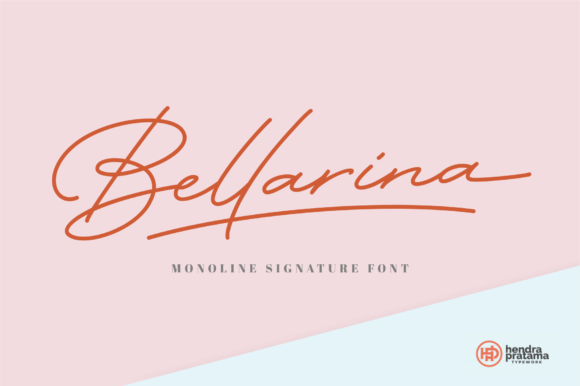
Bellarina: A Versatile Monoline Signature Font for Elegant Design
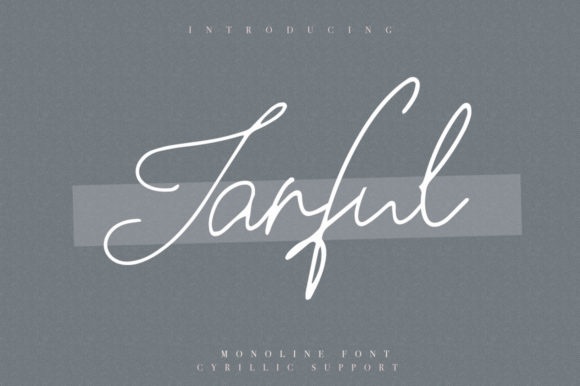
Bellarina is a monoline signature font that offers a clean, sophisticated aesthetic ideal for a variety of design applications. Its minimalist structure and flowing lines make it particularly well-suited for creating elegant signatures on personal or business name cards. However, its versatility extends beyond just signatures, making it a valuable tool in branding projects, social media posts, magazine layouts, and book covers.
As a monoline font, Bellarina features uniform stroke widths throughout each character, which gives it a modern and streamlined appearance. This characteristic sets it apart from other signature fonts that may include varying line thicknesses or more ornate details. The simplicity of Bellarina allows it to maintain clarity at different sizes, ensuring readability whether used in small text or as a larger design element.
What Makes Bellarina Distinct?
Bellarina’s defining feature is its balance between elegance and functionality. Unlike more decorative script fonts, it avoids excessive flourishes while still maintaining a handwritten feel. This makes it an excellent choice for professionals who want a polished yet approachable look in their branding or communication materials.
The font’s structure also allows for easy customization. Designers can adjust spacing, size, and alignment without compromising the overall aesthetic. This adaptability makes Bellarina suitable for both digital and print formats, offering flexibility in how it is applied across different media.
Comparing Bellarina with Similar Fonts
When considering signature fonts, Bellarina sits in a unique space between traditional calligraphy and modern minimalism. Fonts like Lobster or Great Vibes offer more elaborate, cursive styles that are often used for artistic or decorative purposes. In contrast, Bellarina provides a more restrained and professional appearance, which may be preferable for business-oriented designs.
Other monoline fonts such as Playfair Display or Open Sans are primarily designed for body text rather than signatures. While they offer clarity and readability, they lack the personal touch that Bellarina brings to a design. This makes Bellarina a better fit for situations where a handwritten style is desired but not overly stylized.
Strengths and Best Fit Situations
Bellarina excels in scenarios where a clean, professional look is needed. For instance, in business name cards, it can convey a sense of sophistication without being too formal. Its legibility at smaller sizes ensures that contact information remains clear and easy to read.
In branding projects, Bellarina can serve as a complementary font to more structured typefaces. It adds a human element to logos, headings, or taglines, making them feel more personal and relatable. This is especially useful for businesses aiming to build a connection with their audience through visual identity.
On social media platforms, Bellarina can be used in profile pictures, captions, or promotional graphics. Its fluidity and consistency help maintain a cohesive brand image across different content types. Similarly, in magazines or book covers, it can provide a refined, stylish touch that enhances the overall design without overpowering other elements.
Tradeoffs and Limitations
While Bellarina is highly versatile, it may not be the best choice for every project. Its minimalistic design might not convey the same level of creativity or uniqueness as more ornate fonts. For example, in artistic or editorial contexts where bold typography is desired, Bellarina could appear too understated.
Additionally, because it is a monoline font, it lacks the dynamic variation found in some script fonts. This means that it may not be as effective in situations where visual contrast or emphasis is needed. Designers should consider this when deciding whether Bellarina aligns with their creative goals.
When to Choose Bellarina
Bellarina is an excellent option for those seeking a professional yet personalized look. If you're designing a business card, logo, or social media graphic and want to maintain a sleek, modern appearance, Bellarina can provide the right balance. It is particularly well-suited for individuals or companies in industries such as finance, law, or consulting, where a polished image is essential.
For designers working on branding projects that require consistency across multiple platforms, Bellarina offers a reliable choice. Its adaptability ensures that it can be used effectively in both digital and physical formats without losing its visual appeal.
When to Consider Alternatives
If your design requires a more distinctive or expressive style, you may benefit from exploring other fonts. For example, if you're creating a logo for a creative agency or a fashion brand, a more stylized script font could better reflect the brand's personality. Similarly, if you need a font that works well in long-form text, a serif or sans-serif typeface might be more appropriate.
It's also worth considering the target audience when selecting a font. In some cases, a more traditional or classic font may resonate better with certain demographics. Evaluating the context and purpose of your design will help determine whether Bellarina is the most suitable choice.
Practical Applications of Bellarina
One practical use of Bellarina is in creating custom signatures for professionals. Whether for a personal website, email signature, or business letterhead, it can add a touch of refinement that reflects the individual's attention to detail. Its simplicity also makes it easier to reproduce consistently across different mediums.
In marketing materials, Bellarina can be used to highlight key messages or emphasize brand values. For instance, a tagline on a brochure or a headline on a poster can benefit from its clean, readable form. This helps draw attention without distracting from the main content.
For independent creators or small businesses, Bellarina can serve as a cost-effective alternative to more expensive custom fonts. It provides a high-quality, professional look without the need for extensive design resources or licensing fees.
Conclusion
Bellarina is a well-rounded monoline signature font that offers a blend of elegance and practicality. Its clean design and adaptability make it suitable for a wide range of applications, from business cards to branding projects. While it may not be the best fit for every situation, it provides a reliable option for those seeking a polished, professional look.
By understanding its strengths and limitations, designers and professionals can make informed decisions about when and how to use Bellarina. Whether used as a primary font or as a complementary element, it has the potential to enhance visual communication in meaningful ways.